
- Lecturer: Ansgar Meroth
- Lecturer: Huynh Bao Thanh
- Lecturer: Nguyen Thi My Tien

On successful completion of this module the student will be able to:
- apply the electric circuit problem-solving process to analyze an electric circuit;
- analyze dc voltages, dc currents, and dc power in linear dc circuits;
- understand the different methods to analyze electric circuits, their scope, and their advantages and disadvantages: parallel components, series components, Δ-to-Y equivalent circuit, source transformation, Norton and Thévenin equivalent circuits, node-voltage method, mesh-current method, etc.;
- select the most appropriate analysis methods for a practical application;
- perform an electric circuit analysis to find the unknown circuit parameter;
- determine the power budget in an electric circuit;
- solve first- and second-order differential equations with constant inputs;
- understand phasor representation of sinusoidal signals and use the method for solving linear differential equations with sinusoidal inputs;
- apply the phasor concept to solve circuits for the sinusoidal steady-state response;
- use active and reactive power in ac circuits, understand the distinction between instantaneous and average power and use the concept of maximum power transfer;
- analyze various configurations of three-phase ac circuits.
- Lecturer: Klein Udo
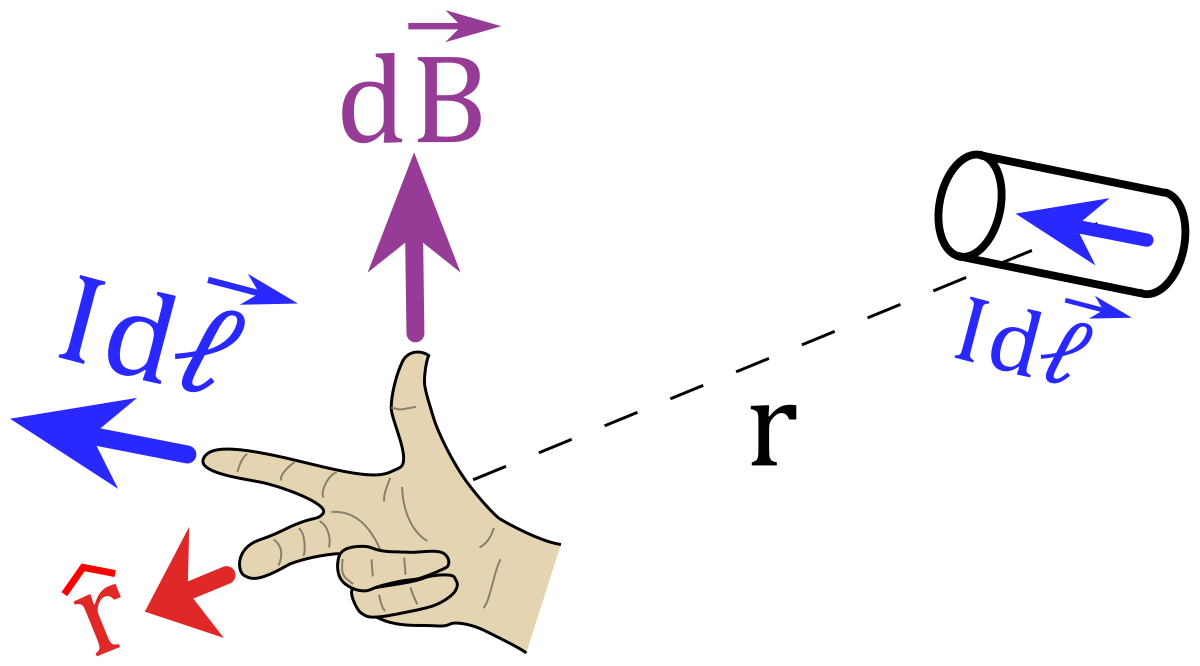
This course introduces the tools and techniques to study static
electric fields and steady magnetic fields. Time-dependent
electromagnetic fields are discussed as far as it is necessary to
introduce electromagnetic induction. The course guides the student
to an understanding of the mathematical formalism underlying the
study of electromagnetic fields as it is expressed in Maxwell’s
equations. The physical interpretation and the relevance to electrical
engineering is developed in a systematic and comprehensive
description of electromagnetic fields. The approach is to emphasize
physical understanding and problem-solving skills. The experimental laws
are presented as concepts that are then unified in Maxwell’s equations.
The mathematical tools are introduced
on an as-needed basis.
- Lecturer: Klein Udo